





PCG reports China firing flares at BFAR plane


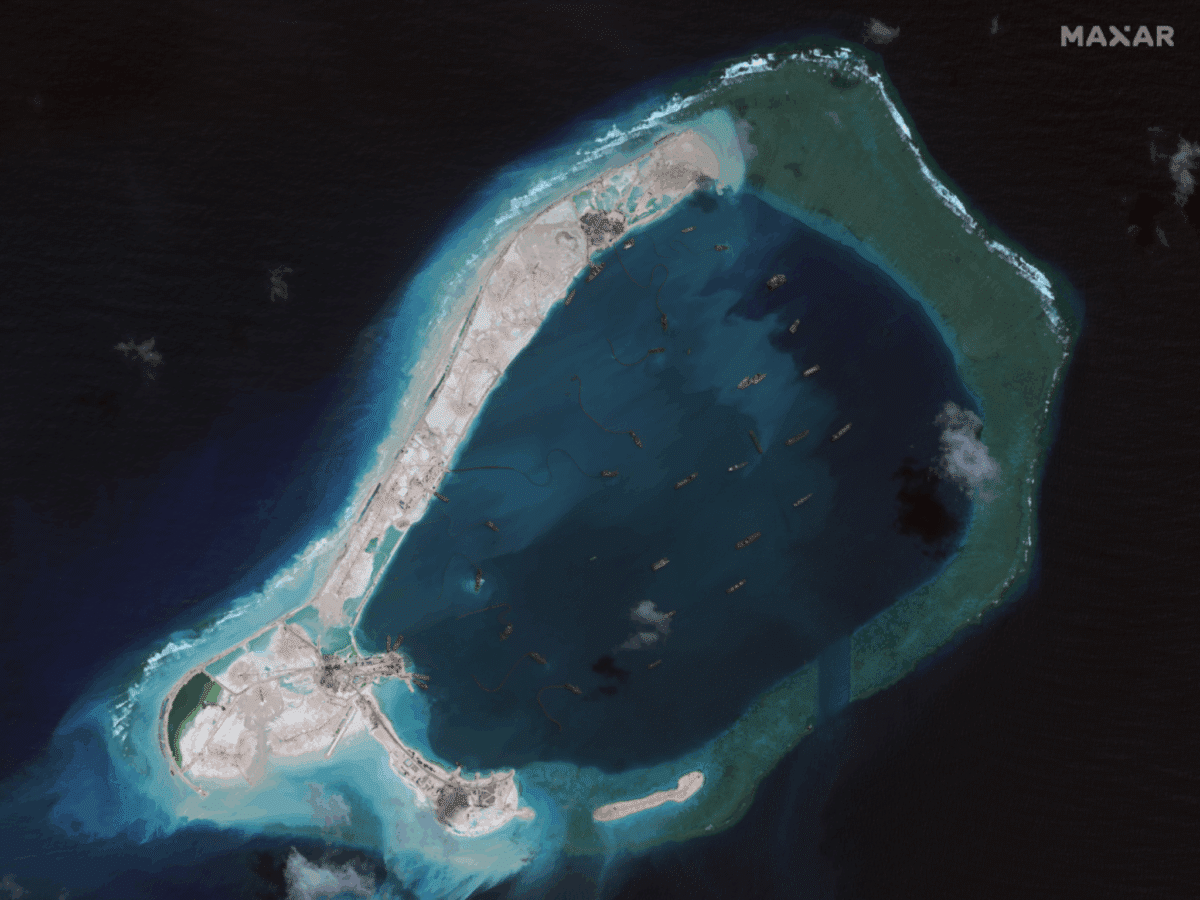
MANILA, Philippines—Chinese forces fired three flares from an island toward a Philippine plane undertaking a routine patrol on Saturday in the disputed South China Sea.
But the incident did not cause any problem, and the aircraft proceeded with its surveillance mission, the Philippine Coast Guard (PCG) said.
It was not immediately clear how far the flares were from the Bureau of Fisheries and Aquatic Resources (BFAR) Cessna Grand Caravan aircraft.
Filipino officials said the flares were fired from Subi Reef in the Spratly Islands.
Subi is one of seven disputed and mostly submerged reefs that China turned into island bases more than two decades ago in the Spratlys, the most hotly disputed region of the South China Sea.
A missile system protects the artificial islands, and three of them have military-grade runways, according to US and Philippine security officials.
US security strategy
Beijing did not immediately comment on the incident. But Chinese forces have fired flares from occupied islands and from their aircraft as a warning for foreign planes to move away from what Beijing calls its airspace in the disputed waters.
Beijing claims virtually the entire South China Sea, a key global trade route, and has vowed to staunchly defend its sovereignty, although that principle does not legally apply to the world’s seas.
Over the weekend, US President Donald Trump released his National Security Strategy (NSS), which tackles US security issues worldwide, including the South China Sea.
The United States has patrolled the South China Sea for decades and repeatedly warned it’s obligated to defend the Philippines, its oldest treaty ally in Asia, if Filipino forces come under an armed attack.
Trump’s NSS, however, does not mention any role by the Philippines in any portion about the South China Sea or Taiwan, the island democracy claimed by Beijing as its historic territory.
But the NSS mentions Japan and South Korea, among other allies whose resources and territory the United States wants committed to their shared security interests.
Tensions also continue to mar China’s relations with other nations in the region, including its old rival Japan.
On Saturday, J-15 aircraft from the Chinese carrier Liaoning locked radar onto Japanese F-15s on two occasions, prompting concern and protest from Tokyo.
Video footage
The PCG, which carried out Saturday’s surveillance flight with BFAR, said video footage was taken by the BFAR plane showing “three flares fired from the reef toward the aircraft during its lawful overflight.”
“These flights aim to monitor the marine environment, assess the status of fisheries resources, and ensure the safety and welfare of Filipino fishermen in the West Philippine Sea,” the PCG said, using the Philippine name for the stretch of the South China Sea that Manila claims as part of its exclusive economic zone (EEZ), in accordance with a 2016 arbitral ruling it won against Beijing.
The PCG said the BFAR plane spotted a Chinese hospital ship, two Chinese coast guard ships, and 29 suspected militia ships anchored in waters off Subi.
Aside from Subi, the Philippine patrol plane flew near six other disputed islands, reefs, and atolls, including Sabina, an uninhabited disputed shoal where it monitored a Chinese navy ship.
“This vessel repeatedly issued radio challenges against the [BFAR] aircraft while it was flying well within Philippine sovereign rights,” the PCG said.
“All safe and mission accomplished,” Commodore Jay Tarriela, PCG spokesperson, said of Saturday’s surveillance flight.
Chinese activity
The PCG has been monitoring Chinese activity in the area of Panatag (Scarborough) Shoal and even near the coastal waters of Zambales province for more than a week.
Panatag Shoal, also known as Bajo de Masinloc, is located some 220 kilometers away from Luzon in the West Philippine Sea, still well within the country’s EEZ.
Besides vessels of the China Coast Guard, People’s Liberation Army Navy warships were also spotted near Panatag last week. —Reports Associated Press and Gabryelle Dumalag/abc
For comprehensive coverage, in-depth analysis, visit our special page for West Philippine Sea updates. Stay informed with articles, videos, and expert opinions.


