





Experts warn of rapid marine ecosystem decline amid focus on WPS issues


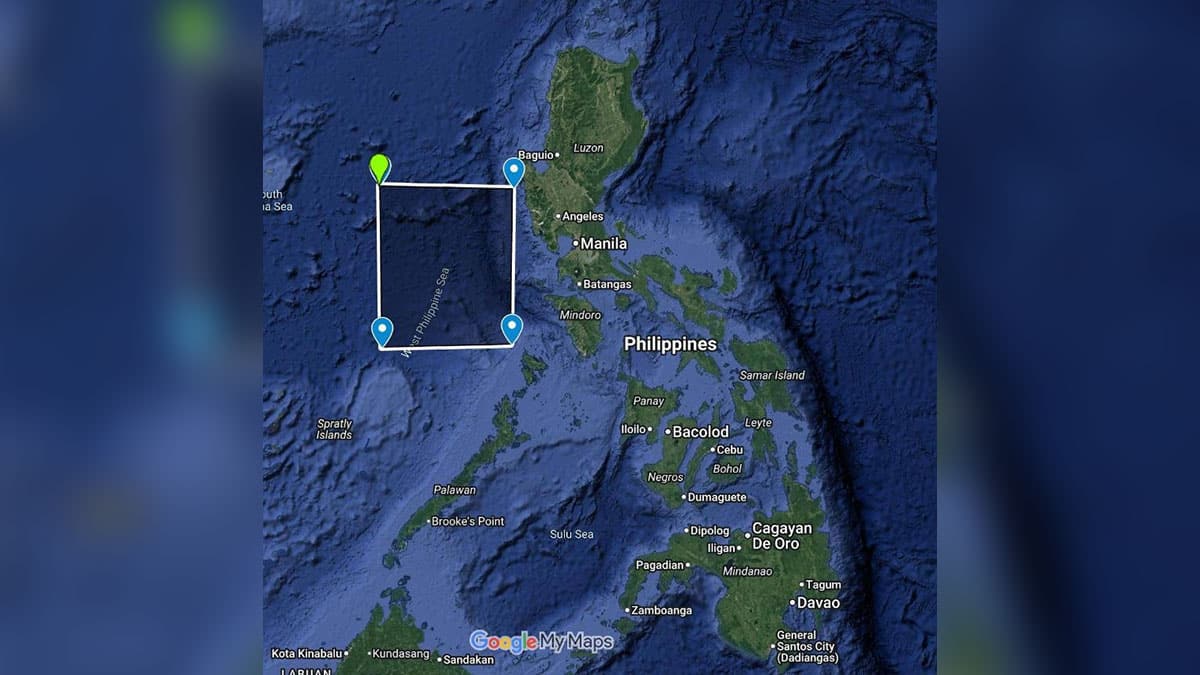
MANILA, Philippines — While public attention remains fixed on sovereign rights in the West Philippine Sea, a marine expert warned that the country may be overlooking an equally urgent threat—the rapid degradation of its marine ecosystems.
Dr. Deo Onda, of the University of the Philippines Marine Science Institute, highlighted this point during a roundtable discussion on Thursday, noting that tensions in the region have “pulled us away” from other security threats the country faces.
“If you look at many of the responses that we have in the West Philippine Sea, it’s very much strategic, military-based, or political in a way. But to expand the definition of security, we also need to look into food security, for example, climate security, economic security,” Onda told reporters participating in the Southeast Asia Maritime Media Visits Program organized by the Australian government.
“And what’s happening in the West Philippine Sea, or the resources and problems that we have in the West Philippine Sea, are not just found in the West Philippine Sea. It’s the same thing that you will actually find in the eastern part of the Philippines as well as in the South,” he added.
Among the threats he cited was the decline of coral reefs, from 40 percent in 2000 to 10 percent at present, with only 5 percent classified as “excellent” reefs at the national level. He also pointed out that mangroves and seagrasses — the main drivers of coastal productivity — were “declining significantly.”
WPS-focused studies, research
Onda disclosed that the government’s focus on the West Philippine Sea and related issues is reflected in marine scientific studies, which are crucial for accounting for national resources.
“But if you look at how many resources have been allocated, how much ship time has been allocated, for example, there’s really a big disparity between the West Philippine Sea and the other areas of the country,” the marine expert said.
He explained that the concentration of research resources in contested waters has led to uneven scientific attention across the country’s maritime zones, citing security and maritime analyst Jules Amador III, who noted that “where there is tension, there’s more money.”
“So there’s more research that’s been done in this part of the area, primarily because those are where the resources are going to. And I think, as you’ve mentioned, it really detracts us, or pulls us away from the bigger goal of actually looking at the maritime and archipelagic identity of the country,” he elaborated.
“When you talk about maritime and archipelagic, it’s not just really the West Philippine Sea. It’s the 7,641 islands, right? So resources should also be allocated there. So, going back to the marine scientific research, for example, we barely know about the eastern seaboard of the Philippines, or at least the Pacific seaboard. We barely know,” Onda explained.
Develop the ‘blue economy’
Turning to policy priorities, Onda emphasized that the country’s main goal should be developing its blue economy, which the World Bank defines as the “sustainable use of ocean resources for economic growth, improved livelihoods and jobs and ocean ecosystem health.”
He pointed out that the West Philippine Sea accounts for only 40 percent of the country’s territory, while the remaining 60 percent, where many coastal communities reside, often receives less attention and support.Onda noted that geopolitical tensions have skewed resource allocation, leaving these communities underserved.
For his part, Amador highlighted a major challenge in advancing the blue economy — the lack of integrated planning between maritime and land-based economic policies.
He explained that the Philippines’ planning system has historically focused on land, leaving marine spatial planning underdeveloped and critical questions about ports, submarine cables, and other maritime infrastructure largely unaddressed.
Reflecting on the country’s long journey in maritime legislation, the maritime and security expert noted that it took decades after ratifying the United Nations Convention on the Law of the Sea (UNCLOS) and enactment the Philippine Baseline Law before the Philippine Maritime Zones Act, or the Republic Act No. 12064, was finally passed over a year ago.
President Ferdinand Marcos Jr. signed the measure into law on November 8, 2024. The landmark legislation defines the country’s internal waters, archipelagic waters, territorial sea, contiguous zone, exclusive economic zone, and continental shelf, aligning with the 1982 UNCLOS and the 2016 Arbitral Ruling.
Despite the country’s extensive maritime zones, he said, maritime issues occupy only a small portion of the national security policy, even though they are likely to become a major foreign policy concern in the future.
With these developments, Amador highlighted the need for a blue economy law to guide programs in maritime research, aquaculture, fisheries, and energy exploitation.
READ: Expert notes China’s strategic leverage in SCS subsea networks
Fisheries and economic connectivity in the WPS
Onda said the West Philippine Sea goes beyond the reefs and shoals of the Kalayaan Island Group, covering waters within the Philippines’ 200-nautical-mile Exclusive Economic Zone, where it has exclusive rights to explore and manage marine resources.
“Basically, all industries and all communities that live on the coast-western side of the Philippines actually are dependent on the West Philippine Sea,” he said, estimating that between 60,000 and 160,000 fishing vessels operate in the area at any given time, depending on seasonal monsoon patterns.
He then explained the concept of ecological connectivity, describing how reefs in the South China Sea serve as sources of eggs and larvae that disperse across the region.
“The oceans move; those eggs and larvae will actually get dispersed and transported somewhere else. And then at a certain given point in time, they will settle, and then they actually become adults, and that’s what you catch,” he said.
Onda added that this connectivity links the KIG to the western Philippine coast and even to neighboring countries such as Thailand, Vietnam, Malaysia, and Indonesia, emphasizing that the health of coral reefs is critical in maintaining this system.
“So the South China Sea has become a stepping stone. It actually connects all of these regions. Now, what happens is that because the corals are the main habitats where these organisms live, you kill those corals, you disrupt the connectivity,” he stressed.
“What will happen to the sink if the sources get cut? So that’s an important ecological connectivity that we need to really emphasize because it doesn’t recognize boundaries. Fishes do not have passports. Corals do not have passports,” he pointed out. /jpv
For comprehensive coverage, in-depth analysis, visit our special page for West Philippine Sea updates. Stay informed with articles, videos, and expert opinions.


