





PH urged to develop micro satellites for better WPS monitoring


MANILA, Philippines — The country should develop space-based radar systems such as micro satellites to better monitor the West Philippine Sea, an expert has said.
Rommel Jude Ong, a retired Philippine Navy rear admiral and a professor at the Ateneo School of Government, made the suggestion as the military continues to acquire ground-based radar systems.
However, Ong noted that ground radars have certain limitations.
READ: West Philippine Sea: Giving China the warfare it deserves
“Radars have an effective range limited by the curvature of the Earth and the height of the radar,” Ong told Inquirer on Thursday. “It cannot track the entire West Philippine Sea.”
“That’s why [it’s] better to shift to spaced based systems such as micro satellites,” he also said.
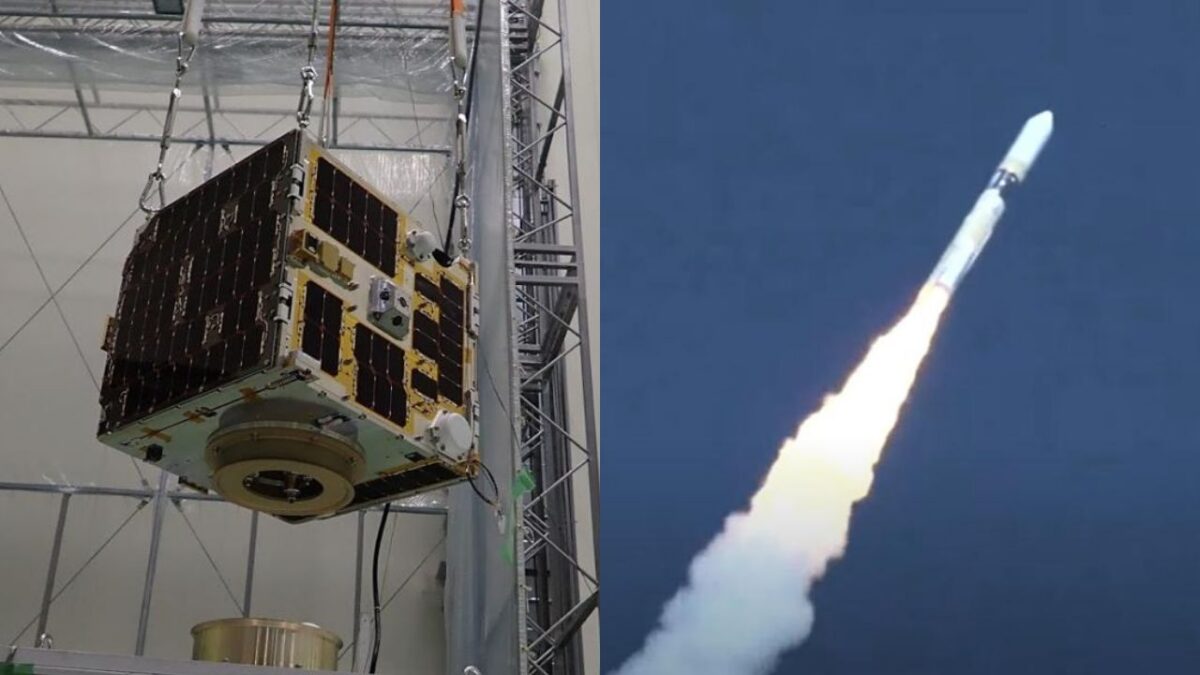
The Department of Science and Technology has assembled two micro satellites — Diwata-1 and Diwata-2 — for civilian use.
Diwata-1 and Diwata-2 were launched into space from Japan in 2016 and 2018, respectively. Diwata-1 has already been decommissioned in 2020, while Diwata-2 is still operational.
The Diwata micro satellites are primarily designed for disaster risk management, environmental monitoring and agricultural assessment.
Initial plan stalled
Ong said there was once a plan to develop microsatellites for military use.
In fact, he said astrophysicist Dr. Rogel Sese has identified Mati, Davao Oriental as the possible location of its launch pad.
“That was our plan before I retired,” Ong, who had been involved in the management of the Navy’s modernization projects before his mandatory retirement in 2019, said. “It just did not push through.”
For now, the country’s most modern radar system is also Japanese-made and is positioned in northern Luzon near the West Philippine Sea.
The Wallace Air Station in La Union serves as the home of the J/FPS-3ME warning and control radar system, which features an active electronically scanned array, an instrumented range of over 300 nautical miles, a 95 percent detection probability, and capabilities for both air defense and ballistic missile defense, according to the Philippine Air Force.
On Wednesday, the Japanese embassy also turned over five coastal radar systems worth 600 million yen (P228.4 million).
The Navy on Thursday said the coastal radar system comprises radar units, surveillance and monitoring equipment, communications systems, and other essential support components.
“The integration of these advanced radar systems will bolster the Philippine Navy’s capability for early detection, identification, and tracking of maritime activities,” the Navy said in a statement.
Radars in the West Philippine Sea areas?
Ong said among the possible deployment of these radars are Palawan province as well as maritime features in the West Philippine Sea.
“[The] Philippine Navy can concentrate the five radars in the Palawan area and at least one [each] in Pagasa Island and Lawak Island,” Ong said.
The West Philippine Sea saw the emergence of tensions between Manila and Beijing due to the latter’s sweeping sovereignty claims in the South China Sea, effectively dismissed by the landmark 2016 Arbitral Award.
“Last option is to concentrate them in north Philippines,” Ong also said.
Ong was referring to the possibility of their deployment to replace existing radars along Batanes Group of Islands, which are situated next to the channels of Bashi and Balintang that are part of the wider Luzon Strait.
Batanes faces Taiwan, a self-ruled island that China considers a renegade province subject to reunification.
Meanwhile, he also said Balabac Strait, Mindoro Strait, San Bernardino Strait and Surigao Strait are also its possible deployment.
“[It’s] speculative from my end,” Ong said in a caveat.
For her part, Navy spokesperson Capt. Marissa Martinez told the Inquirer on Wednesday that the Navy could not yet disclose the location where the radars will be deployed, citing operational security.
Martinez said the radars will be distributed and installed to different naval monitoring stations “either on the second or third week of February.” /mr


