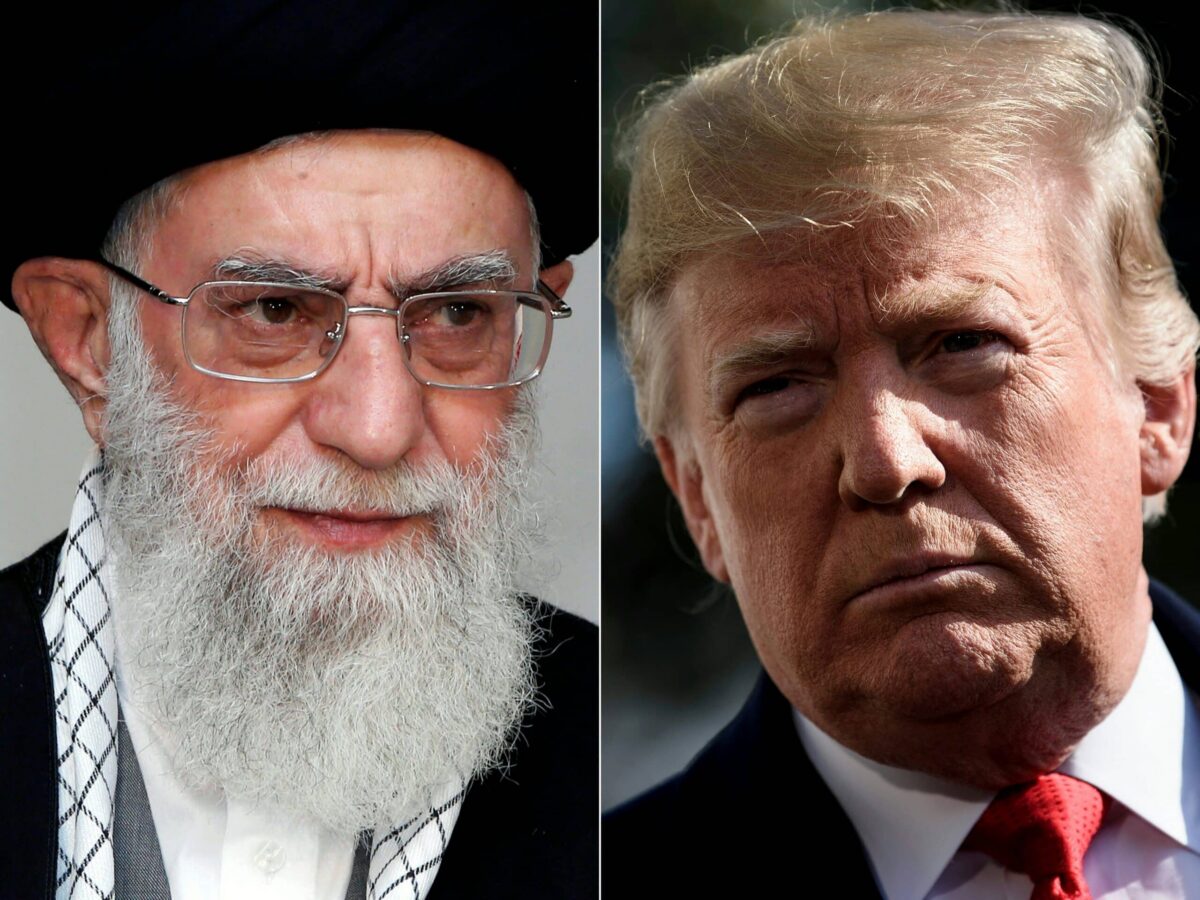
The Iran attacks and the wider exchange of strikes with the United States and Israel raise immediate safety questions for Filipinos in the Middle East, as well as possible effects on travel, jobs, and oil prices at home.
Bookmark this page to stay updated with the latest news and features related to the US, Israel attack on Iran.
March 7 , 2026 – 04:51 PM
Dubai airport, the world’s busiest for international traffic, suspended operations on Saturday after an aerial interception in the area.
March 7 , 2026 – 03:26 PM
Israel’s military said more than 80 fighter jets completed a wave of strikes on Iranian military sites, missile launchers and other targets.
March 7 , 2026 – 01:54 PM
Russia provided Iran information that could help Tehran strike American assets in the region, according to two officials familiar with U.S. intelligence.
March 7 , 2026 – 12:49 PM
Donald Trump has plunged the US into its most significant conflict in decades over a “feeling,” the White House said.
March 7 , 2026 – 12:37 PM
Explosions sent up clouds of dark smoke in the Iranian capital city early Saturday, and Tehran retaliated by firing missiles at Israel.
March 7 , 2026 – 11:42 AM
Filipino workers in Qatar are divided over whether to return home or remain in the Gulf state as regional tensions escalate.
March 7 , 2026 – 08:46 AM
Here are the latest events in the Middle East war on Friday.
March 6 , 2026 – 03:23 PM
The death toll from Israeli strikes on Lebanon this week increased to 123, as a new wave of strikes hit Beirut’s southern suburb Friday.
March 6 , 2026 – 03:05 PM
Saudi Arabia said it destroyed three drones east of Riyadh on Friday, as Iran presses on with attacks across the Gulf.
March 6 , 2026 – 02:51 PM
Heavy attacks were reported in Tehran on Friday after Israel said it was hitting “regime infrastructure” in a “new phase” of the war.
March 6 , 2026 – 02:15 PM
Escalona said Marcos will visit the UN Headquarters on March 9 and 10 and is scheduled to meet with UN Secretary-General António Guterres.
March 6 , 2026 – 12:13 PM
Lebanese state media state said Friday that Israel had launched air strikes on several towns in southern Lebanon.
March 6 , 2026 – 11:56 AM
The ongoing war in the Middle East is projected to last for about four to eight weeks based on the reports received by DFA.
March 6 , 2026 – 07:37 AM
The broadening Iran war has ricocheted across the region and beyond, with nearly every country in the Middle East sustaining damage.
March 6 , 2026 – 06:55 AM
The US and its allies in the Mideast are seeking Ukraine’s expertise in countering Iran’s drones, according to Ukrainian President Volodymyr Zelenskyy.
March 6 , 2026 – 06:28 AM
he US House of Representatives on Thursday rejected an effort to curb Donald Trump’s authority to wage war against Iran,
March 6 , 2026 – 05:42 AM
299 Filipinos affected by rising tensions in the Middle East returned safely to the Philippines on Thursday.
March 5 , 2026 – 05:48 AM
t least 1,189 overseas Filipino workers (OFWs) have sought repatriation from several Middle East countries, the OWWA said Wednesday.
March 5 , 2026 – 05:14 AM
President Donald Trump said Wednesday the United States and Israel were in a strong position in their war with Iran.
March 5 , 2026 – 04:20 AM
The Israeli military announced it had launched a new wave of strikes in Tehran on Wednesday, targeting military infrastructure.
March 5 , 2026 – 03:57 AM
Spanish Foreign Minister José Manuel Albares on Wednesday denied that the government had changed its position on supporting the U.S.
March 5 , 2026 – 01:54 AM
Mojtaba Khamenei, a son of Iran’s late Supreme Leader Ayatollah Ali Khamenei has long been considered a contender to be next paramount ruler ,
March 4 , 2026 – 10:52 PM
A U.S. submarine sank an Iranian warship in the Indian Ocean, as Washington and Israel intensified their bombardment Wednesday.
March 4 , 2026 – 05:16 PM
The PNP will tighten security measures at the embassies of the United States, Israel, and Iran amid the ongoing conflict in the Middle East.
March 4 , 2026 – 05:13 PM
The PNP on Wednesday offered its resources to help repatriate OFWs from the Middle East amid the ongoing conflict involving the United States, Israel, and Iran.
March 4 , 2026 – 04:27 PM
Eleven Bulacan vice mayors who have been stuck in Dubai since the Feb.28 joint attack on Iran by the US and Israel have secured flights back home.
March 4 , 2026 – 03:42 PM
1,189 OFWs have requested repatriation from several Middle East countries, the OWWA said Wednesday.
March 4 , 2026 – 02:59 PM
The repatriation of overseas Filipino workers (OFWs) affected by the ongoing conflict in the Middle East should be undertaken
March 4 , 2026 – 02:16 PM
The Asean on Wednesday called the escalation of conflict in the Middle East “regrettable” amid Oman-led efforts for a diplomatic solution.
March 4 , 2026 – 01:20 PM
Iran’s Revolutionary Guards said Wednesday they control the Strait of Hormuz, a vital shipping route for oil and gas.
March 4 , 2026 – 11:47 AM
Iran’s top national security exec Ali Larijani is one of the few people trusted by Khamenei to ensure the regime’s survival in case of the ayatollah’s death.
March 4 , 2026 – 11:40 AM
By stepping up long-range drone strikes against Gulf countries, Iran is exploiting the inadequacy of their defenses against the low-cost threat.
March 4 , 2026 – 10:57 AM
Israel early Wednesday launched new attacks on Iran as the US military said it has hit nearly 2,000 targets inside the Islamic republic.
March 4 , 2026 – 10:47 AM
President Donald Trump and his team scrambled Tuesday to reclaim the narrative on why he decided to attack Iran.
March 4 , 2026 – 09:27 AM
France is sending its flagship aircraft carrier to the Mediterranean in response to the widening conflict in the Middle East.
March 4 , 2026 – 09:20 AM
Governments and airlines scrambled to repatriate thousands of travelers stranded in the Middle East as regional conflict intensifies.
March 4 , 2026 – 06:51 AM
An air strike hit a military base in southern Iraq housing the Iran-backed Kataeb Hezbollah group, two sources from the armed faction said.
March 4 , 2026 – 05:45 AM
More than a thousand Filipinos in different Middle East countries are asking the government to bring them back to the Philippines.
March 4 , 2026 – 05:15 AM
Israel’s transport minister said the country will gradually reopen its airspace overnight between Wednesday and Thursday.
March 4 , 2026 – 05:00 AM
Marina has ordered all Philippine-registered ships traveling in international waters to implement heightened security measures.
March 4 , 2026 – 04:39 AM
A drone attack caused a fire near the US consulate in Dubai on Tuesday, a government statement said, after Riyadh hit.
March 4 , 2026 – 04:07 AM
President Donald Trump said Tuesday the US navy would escort oil tankers through the Strait of Hormuz if needed amid the Iran war.
March 4 , 2026 – 02:06 AM
At least two Filipinos were injured in separate attacks in Kuwait and the United Arab Emirates (UAE), countries in the Middle East
March 4 , 2026 – 01:45 AM
US and Israeli strikes pummelled targets across Tehran on Tuesday, as President Donald Trump warned it was “too late” for Iran to seek talks.
March 4 , 2026 – 01:31 AM
Israel stepped up airstrikes against Iranian missile launchers and factories Tuesday, and Iran retaliated across the Gulf region
March 3 , 2026 – 11:46 PM
Israeli and US strikes on Tuesday hit the building of a body tasked with electing Iran’s new supreme leader, local media reported.
March 3 , 2026 – 10:02 PM
Overseas Filipino worker (OFW) killed in Israel amid the ongoing Middle East conflict, the agency’s spokesperson said on Tuesday.
March 3 , 2026 – 07:01 PM
It added that passengers may avail themselves of these options through the Manage Booking portal of the CEB website.
March 3 , 2026 – 06:29 PM
National civil society network E-Net Philippines condemned the reported bombing of girls’ schools in Iran, which has already
March 3 , 2026 – 04:36 PM
United States support for activities in the West Philippine Sea has not decreased despite escalating tensions between Washington and Tehran, the AFP said.
March 3 , 2026 – 03:37 PM
Singapore’s embassy in Riyadh is gauging the demand from Singaporeans in Bahrain to be evacuated by land to the Saudi Arabian capital.
March 3 , 2026 – 03:03 PM
The US embassy in Kuwait said it was closed until further notice, a day after an AFP correspondent saw smoke rising from the mission.
March 3 , 2026 – 02:56 PM
At least 224 Ilonggo overseas Filipino workers from Iloilo City are currently in the Middle East and are being closely monitored by authorities amid ongoing attacks in the region.
March 3 , 2026 – 02:34 PM
President Ferdinand Marcos Jr. urges Filipinos to conserve energy for a possible surge in oil prices amid the conflict in the Middle East.
March 3 , 2026 – 02:17 PM
American bases in Kuwait were at the receiving end of retaliatory strikes from Iran, after the latter was first attacked by the US and Israel.
March 3 , 2026 – 01:57 PM
Defense Secretary Gilberto Teodoro Jr. on Tuesday dismissed concerns that the Philippines could be dragged into the escalating conflict in the Middle East.
March 3 , 2026 – 01:41 PM
An attack by two drones early Tuesday on the US embassy in Riyadh sparked a small fire, a Saudi defense ministry spokesman said in a statement.
March 3 , 2026 – 12:57 PM
Indian airlines said Tuesday that they were resuming limited commercial services to the Middle East in a bid to collect thousands of passengers stranded by war.
March 3 , 2026 – 12:45 PM
With the Middle East considered the “backbone of overseas employment” for Filipinos, an Inquirer data scientist warned that the Philippines could face significant economic fallout from the escalating conflict in the region.
March 3 , 2026 – 12:18 PM
Twenty-two senators signed a resolution calling on the Philippine government to implement measures to protect and repatriate OFWs in the Middle East.
March 3 , 2026 – 12:04 PM
The Philippines has joined other nations in urging a ceasefire in the ongoing Middle East conflict.
March 3 , 2026 – 11:39 AM
More Philippine flights to and from Middle Eastern countries have been canceled due to escalating tensions in the region.
March 3 , 2026 – 11:09 AM
President Ferdinand Marcos Jr. said repatriation of Filipinos in danger areas in the Middle East will not be possible at the moment.
March 3 , 2026 – 10:52 AM
The US Congress is scheduled to vote this week on motions seeking to curb President Donald Trump as he wages war against Iran.
March 3 , 2026 – 10:42 AM
Marina has directed all Philippine ships to implement heightened security, monitoring, and reporting measures amid escalating tensions in the Middle East.
March 3 , 2026 – 10:15 AM
Iran’s Unesco-listed Golestan Palace in Tehran has been damaged in US and Israeli strikes, local media reported Monday.
March 3 , 2026 – 10:09 AM
Air raid sirens warning of incoming Iranian missiles sent residents hurrying to shelters just as the Jewish holiday of Purim was starting.
March 3 , 2026 – 09:57 AM
Israel’s military told residents that they were free to leave their shelters following a wave of Iranian missile launches after midnight on Tuesday.
March 3 , 2026 – 09:44 AM
US forces have shot down hundreds of Iranian missiles, raising concerns over how long American air defense interceptors can last in a prolonged war.
March 3 , 2026 – 09:34 AM
The Department of Foreign Affairs (DFA) on Monday said crisis alert levels for Filipinos in the Middle East remain amid continuing tensions in the region.
March 3 , 2026 – 08:45 AM
OWWA-7 is monitoring around 34,000 Central Visayas OFWs in the Middle East as regional tensions continue to escalate.
March 3 , 2026 – 08:37 AM
US President Donald Trump warned Monday that his attack on Iran could extend longer than a month.
March 3 , 2026 – 08:22 AM
Loud explosions were heard and clouds of smoke seen in Riyadh’s diplomatic quarter, home to foreign embassies in the Saudi capital.
March 3 , 2026 – 07:47 AM
President Donald Trump said US strikes were the “last, best chance” to stop Iran building a nuclear bomb, as war raged through a third day.
March 3 , 2026 – 07:10 AM
Oil and gas prices soared, stock markets mostly retreated and the dollar rallied on Monday as the widening Iran war shook financial markets
March 3 , 2026 – 05:55 AM
The Marcos administration has not decided yet on ordering a mass repatriation of the more than two million Filipinos in the Middle East.
March 3 , 2026 – 05:40 AM
The remains of the Filipina caregiver who died during an Iranian airstrike in Israel will not be brought home soon.
March 3 , 2026 – 05:30 AM
Iran and Iranian-backed militias fired missiles at Israel and Arab states, apparently hitting the US Embassy compound in Kuwait.
March 3 , 2026 – 05:00 AM
Comelec said on Monday that overseas voter registration in Philippine embassies and consulates located in the Middle East would continue.
March 3 , 2026 – 03:39 AM
Qatar downed two Iranian bombers and halted LNG production on Monday, as Tehran widened its attacks to hit oil facilities in KSA and UAE.
March 2 , 2026 – 10:51 PM
Dubai Airports on March 2 announced a limited resumption of operations after suffering damage amid the ongoing conflict in the Middle East.
March 2 , 2026 – 08:35 PM
Villar: “The government must be prepared not only for evacuation but also to help our OFWs who may lose their livelihoods because of the…
March 2 , 2026 – 08:13 PM
In response, Iran has sent missiles to Israel and the American bases in Bahrain, Kuwait, Qatar, and the United Arab Emirates.
March 2 , 2026 – 08:35 PM
Villar: “The government must be prepared not only for evacuation but also to help our OFWs who may lose their livelihoods because of the…
March 2 , 2026 – 06:56 PM
No changes have been made to the crisis alert levels in the Middle East, the Department of Foreign Affairs (DFA) said on Monday.
March 2 , 2026 – 06:37 PM
Malaysia’s Parliament on March 2 observed a moment of silence over the deaths of Iran’s Supreme Leader Ayatollah Ali Khamenei and his people.
March 2 , 2026 – 06:33 PM
Police in Indian-administered Kashmir fired teargas on Monday during clashes with thousands of demonstrators protesting the killing of Iran’s Ali Khamenei.
March 2 , 2026 – 05:45 PM
After 36 years in power, Ayatollah Ali Khamenei is dead, but a provisional leadership council is to secure his regime’s hold on power and continue the war.
March 2 , 2026 – 05:12 PM
Delegates at the UN’s nuclear agency began meeting on Monday for an extraordinary session on Iran in the wake of the US-Israeli strikes on the Islamic republic.
March 2 , 2026 – 05:03 PM
Iran’s Revolutionary Guards said they launched missile strikes on Israel’s Tel Aviv, Haifa and East Jerusalem.
March 2 , 2026 – 04:06 PM
Ex-Albay Rep. Joey Salceda on Monday urged the government to roll out fuel subsidies and prepare to evacuate overseas Filipino workers (OFWs) amid US-Iran conflict.
March 2 , 2026 – 03:35 PM
OFWs across the Middle East are facing direct and indirect risks from the escalating conflict in the region, triggered by US-Israel strikes late last month.
March 2 , 2026 – 03:04 PM
An AFP correspondent saw black smoke rising from the US embassy in Kuwait on Monday.
March 2 , 2026 – 02:03 PM
Hunkered down at his luxury Mar-a-Lago resort in Florida, Donald Trump kept an unusually low profile after announcing the start of huge military strikes on Iran.
March 2 , 2026 – 01:55 PM
The NSC has dismissed claims that the Middle East crisis will spill over into the Philippines due to the presence of Edca sites, where US forces are stationed.
March 2 , 2026 – 01:42 PM
There is no order yet for the mass repatriation of the more than 2 million Filipinos in the Middle East amid the ongoing crisis, but the Philippine gov’t is ready.
March 2 , 2026 – 12:46 PM
The DSWD will assist OFWs affected by the ongoing conflict in the Middle East once they return to the country, the agency spokesperson said Monday.
March 2 , 2026 – 11:58 AM
The PNP is considering beefing up security for the ambassadors of the United States (US) and Israel.
March 2 , 2026 – 11:50 AM
A total of 189 OFWs bound for the United Arab Emirates and Saudi Arabia were stranded in Hong Kong due to ongoing Middle East crisis.
March 2 , 2026 – 11:34 AM
Israel and Hezbollah traded fire, while Donald Trump vowed to avenge the deaths of US service members and said the war with Iran could last for weeks.
March 2 , 2026 – 11:26 AM
The United States hit hundreds of targets across Iran, and Israel expanded its bombing to Lebanon on Monday as Trump vowed to avenge the first US deaths.
March 2 , 2026 – 11:13 AM
First Lady Melania Trump is slated to chair a UN Security Council meeting on Monday, an appearance that was announced last week.
March 2 , 2026 – 09:35 AM
Several Philippine flights to and from key Middle East destinations have been canceled or rerouted as tensions in the region continue.
March 2 , 2026 – 08:13 AM
President Donald Trump sought to justify the military operation against Iran by citing the need to ensure America’s long-term security.
March 2 , 2026 – 08:02 AM
The PNP is monitoring possible spillover effects of the latest strikes by the United States (US) and Israel against Iran.
March 2 , 2026 – 07:41 AM
Oil prices soared in Asia on Monday on the back of turmoil in the Middle East following US and Israeli military strikes on Iran.
March 2 , 2026 – 07:27 AM
Stranded travelers scrambled to make new connections and get through to airlines on jammed phone lines Sunday after the attack on Iran
March 2 , 2026 – 07:22 AM
US Pres. Trump has committed to avenge the deaths of three US service members as he called on Iranians to rise up against their government.
March 2 , 2026 – 06:59 AM
British PM Starmer said he had agreed to let the United States use UK bases to fire “defensive” strikes aimed at destroying Iranian missiles.
March 2 , 2026 – 05:55 AM
A Filipino caregiver was killed in Israel on Sunday as Iranian forces launched a counterattack, the 1st casualty in the Mideast crisis.
March 2 , 2026 – 05:50 AM
An enormous explosion rocked Iran’s capital on Sunday as the Israeli military said it was targeting the heart of the city.
March 2 , 2026 – 05:49 AM
US President Donald Trump on Sunday warned Iran’s security forces to surrender or be killed, after the US military said it destroyed the headquarters of the elite Revolutionary Guards.
March 2 , 2026 – 05:10 AM
The Roman Catholic Archbishop of Manila on Sunday asked the faithful to pray for peace amid the escalating tension in the Middle East
March 2 , 2026 – 04:47 AM
At least 17 people were killed Sunday across Pakistan as protesters outraged over the death of Iran’s supreme leader took to the streets.
March 2 , 2026 – 04:27 AM
US and Israeli strikes against Iran and the repercussions in the Middle East are expected to send oil prices soaring when markets open.
March 2 , 2026 – 04:14 AM
The gunman who killed 2 people and wounded 14 overnight in Austin, Texas had expressed “pro-Iranian regime sentiment” on social media.
March 2 , 2026 – 04:02 AM
President Donald Trump said on Sunday that US military strikes had sunk nine Iranian naval vessels and partially destroyed navy HQ..
March 2 , 2026 – 01:07 AM
Three people were killed and 14 wounded in a shooting overnight in downtown Austin, Texas which may be act of terror – FBI
March 1 , 2026 – 11:21 PM
3 members of the US military have been “killed in action” and 5 “seriously wounded” in the operation against Iran, the Pentagon said Sunday,
March 1 , 2026 – 08:55 PM
The Liberal Party of the Philippines (LP) on Sunday called for the immediate de-escalation of the conflict in the Middle East.
March 1 , 2026 – 09:20 PM
President Marcos on Sunday confirmed that a Filipino caregiver has died amid the escalating military conflict in the Middle East.
March 1 , 2026 – 07:26 PM
Pope Leo called for an end to the “spiral of violence” in the Middle East after US-Israel attacked Iran that prompted retaliatory strikes.
March 1 , 2026 – 05:36 PM
Vice President Sara Duterte on Sunday extended her well-wishes to Filipinos in West Asia, commonly known as the Middle East.
March 1 , 2026 – 05:34 PM
Iran‘s police intelligence chief Gholamreza Rezaian was killed during US and Israeli strikes on the Islamic republic, local media reported.
March 1 , 2026 – 04:01 PM
Iran fired missiles at targets in Israel and Gulf Arab states on Sunday in retaliation for the killing of Ali Khamenei by the US and Israel.
March 1 , 2026 – 03:48 PM
The attack on Iran by the United States and Israel disrupted flights across the Middle East and beyond Saturday.
March 1 , 2026 – 03:10 PM
Iran’s armed forces chief of staff Abdolrahim Mousavi was killed along with other senior generals in US and Israeli strikes on the country.
March 1 , 2026 – 02:02 PM
Oman says US-Iran talks made progress and nuclear assurances were given, but the US and Israel soon launched strikes on Iran, citing security threats.
March 1 , 2026 – 02:00 PM
Bishop Ruperto Cruz Santos of the Roman Catholic Diocese of Antipolo urged overseas Filipino workers in the Middle East to pray.