





House suffrage panel says anti-dynasty bill ‘progressive’ step forward


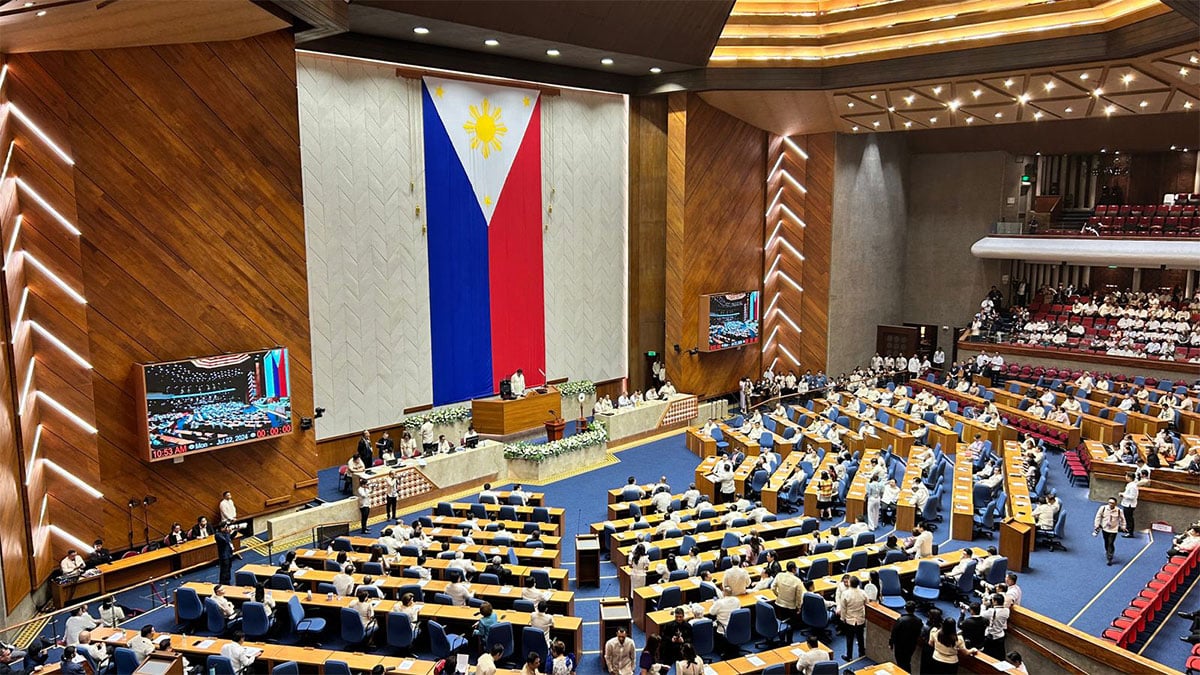
MANILA, Philippines — House Committee on Suffrage and Electoral Reforms Chair Zia Alonto Adiong on Tuesday described the approved substitute anti-political dynasty bill as a progressive step and the first concrete attempt to implement the Constitution’s mandate nearly four decades after it was written.
“This is progressive. This is one step forward,” said Adiong, who represents Lanao del Sur’s 1st District.
Adiong said the country still has no enabling law that defines and prohibits political dynasties.
“In the first place, we do not have an anti-political dynasty as of yet being implemented in this country,” he said.
READ: Erwin Tulfo on anti-dynasty bill: We’ll give others a chance
He said the substitute measure was crafted to address the concentration of power in a single local government unit.
“What we can assure you that this version, we tried to decongest political unit from a culture of one political family. There should be no concentration of power in one LGU,” Adiong said.
The substitute bill, adopted after public consultations and committee hearings held nationwide, bars political dynasties within the second degree of consanguinity or affinity from simultaneously holding elective posts within the same political unit.
According to Adiong, the measure aims to address a core democratic issue.
“Concentration of power because it weakens the very foundation of democracy, which is checks and balances. So, we try to address that,” he said.
At the same time, Adiong clarified that the proposal does not completely bar relatives from running for office in separate localities.
“We cannot prevent altogether those who want the chance to participate in other localities,” he said.
He also noted that seeking office does not guarantee electoral victory.
“Running does not necessarily mean winning. What we are trying to address is the concentration of powers. It has to be eradicated,” he said.
Bukidnon 2nd District Rep. Jonathan Keith Flores, a member of the committee, echoed Adiong’s position and said the current legal framework contains no formal definition of political dynasty.
“Our basis now is zero definition of what political dynasty is,” Flores said.
He said that under the current setup, members of the same family may simultaneously occupy several posts in one political unit, such as mayor, vice mayor, and councilor.
“But with the bill passed only one position can occupy that particular political unit,” Flores said.
He described the proposed measure as a significant change from the status quo.
“It’s a big leap forward because before in one political unit, unli members of the same family. Now just one, in the versions we’re working with,” Flores said.
Responding to calls from some sectors to expand the ban up to the fourth degree, Adiong maintained that the committee-approved version was already a meaningful and practical reform.
“There’s already a very clear policy that there will be an anti-political dynasty measure in this country,” he said. “There’s no actual policy right now covering power concentration within a locality.”
The substitute bill is expected to be sponsored on the plenary floor before the Lenten break, where lawmakers may debate and propose amendments.


