





West PH Sea: Think tank warns vs ‘normalizing’ China’s coercive actions


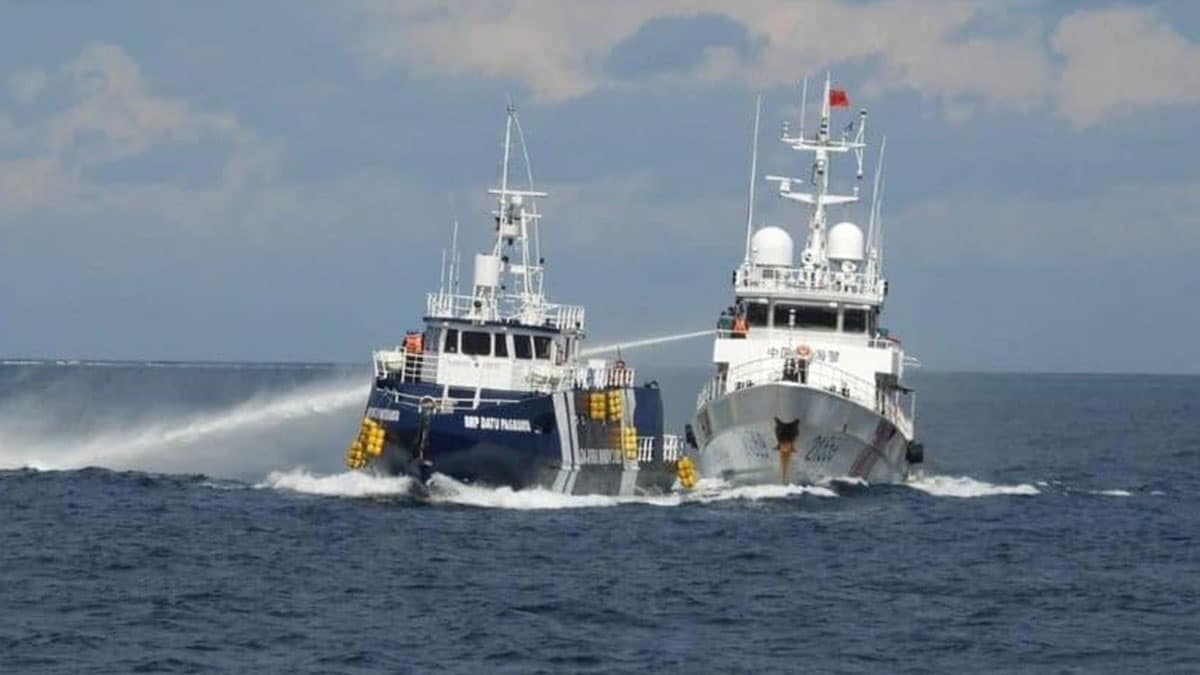
MANILA, Philippines — Chinese state and state-linked vessels have carried out a “clear and escalating pattern of coercion” in the West Philippine Sea, actions that should not be “normalized” or “tolerated,” a think tank said Sunday.
In a statement, the Stratbase Institute pointed out that the Philippine Coast Guard (PCG) recorded 64 illegal, coercive, aggressive, and deceptive actions conducted by China against Philippine missions or vessels in 2025 alone.
These actions involved dangerous maneuvers, shadowing, water-cannon attacks, collisions, radio challenges, and live-fire exercises, the group noted.
“These are only the incidents that were reported and made public. Far from the cameras and the headlines, many more acts of intimidation occur at sea—often involving Filipino fishermen and front-line personnel who continue to operate under constant pressure and uncertainty,” Stratbase President Dindo Manhit said in a forum held over the weekend.
“The growing frequency and intensity of these incidents are deeply alarming. Such behavior, as we have stressed time and again, should not and cannot be normalized or tolerated. It must be met with firm, coordinated, and decisive measures to end this persistent pattern of coercion,” he added.
READ: Stratbase rejects China’s portrayal of PH as ‘provoker’ in WPS
National Security Adviser Eduardo Año also expressed concern over China’s continued use of ICAD tactics, saying these actions are designed to “alter facts” regarding the West Philippine Sea “while remaining below the threshold of armed conflict.”
He recalled that the landmark arbitral ruling in 2016 affirmed the Philippines’ sovereign rights within the West Philippine Sea and “was clear” in invalidating China’s expansive maritime claims, including the “illegal” 10-dash line, which updated the previous nine-dash line.
Moreover, Año said the ruling of the Permanent Court of Arbitration “reinforced the principle that disputes must be resolved through law rather than force.”
READ: Think tank warns of ‘unseen war’ influencing public opinion, information
But in order to promote a “free, open, and rules-based Indo-Pacific region,” Manhit said the Philippines needs to form stronger and more coordinated partnerships with other countries that “believe in openness, transparency, and the peaceful resolution of disputes.”
According to him, these like-minded nations include the United States, Australia, Japan, Canada, New Zealand, France and India.
Noting how nearly two-thirds of global trade passes through the Indo-Pacific region, Manhit also stressed that the conflict in the West Philippine Sea is “not solely a Philippine concern” but a “regional and global one.”
“Safeguarding the maritime domain is not simply about defending territory. It is about defending the principles that allow nations—large and small—to coexist peacefully: respect for international law, freedom of navigation, and the peaceful management of disputes,” he said. /dl
For comprehensive coverage, in-depth analysis, visit our special page for West Philippine Sea updates. Stay informed with articles, videos, and expert opinions.


