





Chinese ship targets BRP Miguel Malvar with fire-control radar — PH Navy


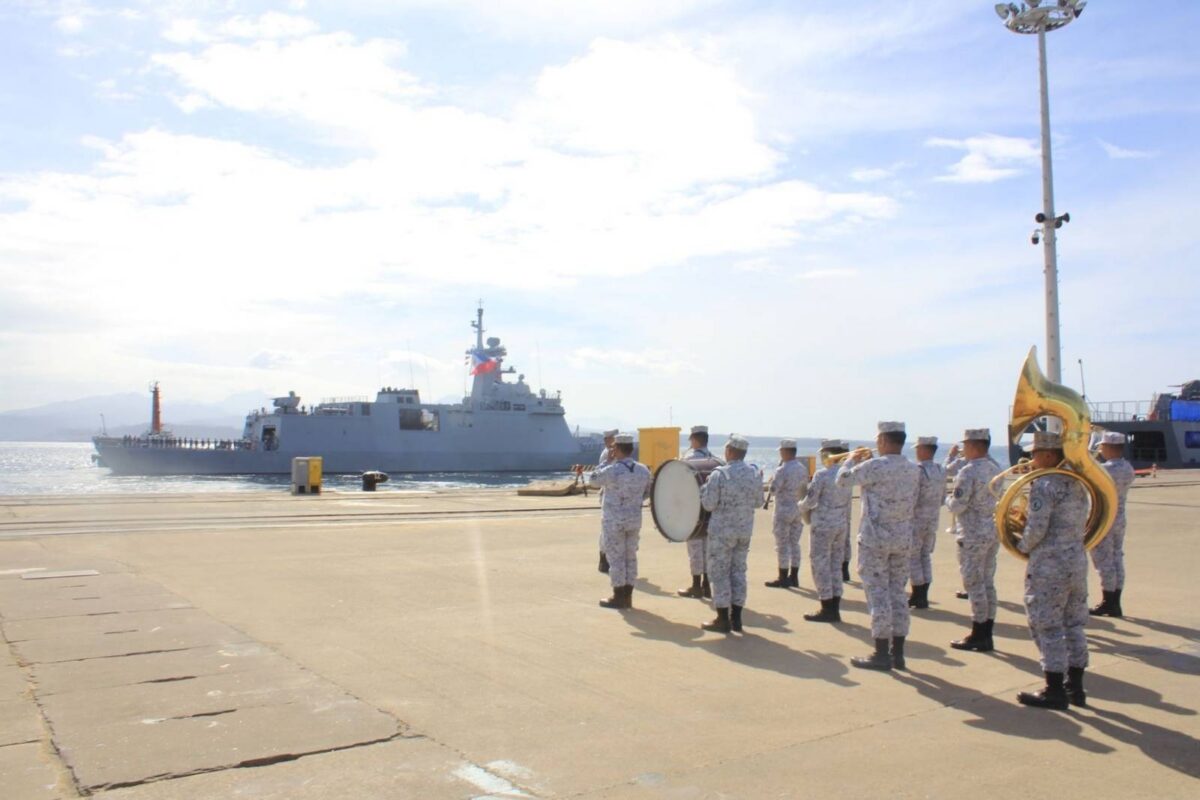
MANILA, Philippines — A Chinese warship aimed its fire-control radar at the Philippine Navy’s BRP Miguel Malvar while it patrolled near Escoda (Sabina) Shoal earlier this month, an action Manila called “alarming and provocative.”
Philippine Navy spokesperson for the West Philippine Sea, Rear Adm. Roy Vincent Trinidad, said the incident occurred on March 7 while the BRP Miguel Malvar was conducting a maritime patrol within the country’s exclusive economic zone.
According to Trinidad, the Philippine vessel detected a People’s Liberation Army Navy ship, identified by bow number 622, approaching its position near Sabina Shoal.
The Chinese ship then directed its fire-control radar at the Philippine vessel, a move considered highly sensitive in naval operations because it can signal targeting for weapons systems.
“This was an alarming and provocative action that created unnecessary risk and could have led to misinterpretation and misunderstanding at sea,” Trinidad said in a statement.
The BRP Miguel Malvar issued a radio challenge, calling on the Chinese ship to stop what the Navy described as “unprofessional and dangerous behavior.”
The Chinese vessel later stowed its fire-control radar, indicating compliance with the warning, and the situation did not escalate further, Trinidad said.
The Philippine military said the encounter underscores the need for restraint and professionalism among vessels operating in contested waters.
“The Armed Forces of the Philippines reiterates that our ships and aircraft will continue to conduct lawful maritime patrols and sovereignty patrols within our EEZ, consistent with international law and the Philippines’ sovereign rights and jurisdiction,” Trinidad said.
Escoda Shoal lies about 140 kilometers west of Palawan in the West Philippine Sea, within the Philippines’ exclusive economic zone.
China, however, claims nearly the entire South China Sea, including these waters, and continues to reject a 2016 arbitral tribunal ruling that invalidated its sweeping claims and upheld Manila’s sovereign rights.
The shoal is also located about 55 km east of Ayungin (Second Thomas) Shoal and around 90 km from Panganiban (Mischief) Reef, one of China’s largest artificial islands.
It serves as a key staging point for Philippine operations in the area, particularly resupply missions to troops stationed aboard the BRP Sierra Madre, a World War II-era vessel deliberately grounded on Ayungin Shoal in 1999 to assert the country’s presence.
Tensions have persisted as Manila asserts its maritime rights while Beijing continues deploying coast guard and naval ships across key features in the West Philippine Sea.
READ: Chinese forces harass PH fishing vessels; 3 injured
READ: BRP Malvar joins India, other nations in naval exercise for first time
In December 2025, China Coast Guard (CCG) and maritime militia vessels fired water cannons at Filipino fishing boats near Escoda Shoal, injuring three fishermen and damaging several vessels.
The harassment involved at least five CCG ships and forced around 20 Filipino boats, carrying hundreds of fishermen, to move away from the area.
Philippine Coast Guard spokesperson for the West Philippine Sea, Rear Adm. Jay Tarriela, said at the time it was the first recorded instance of Filipino fishing boats being directly hit by water cannons.
Some crews sustained injuries, while others were forced to cut anchor lines amid rough seas.
Tarriela also noted that Chinese interference around Escoda had intensified since at least 2024, when Philippine vessels were deployed to monitor activities in the area. /mcm


