





Carpio pushes new case vs China over fishing rights


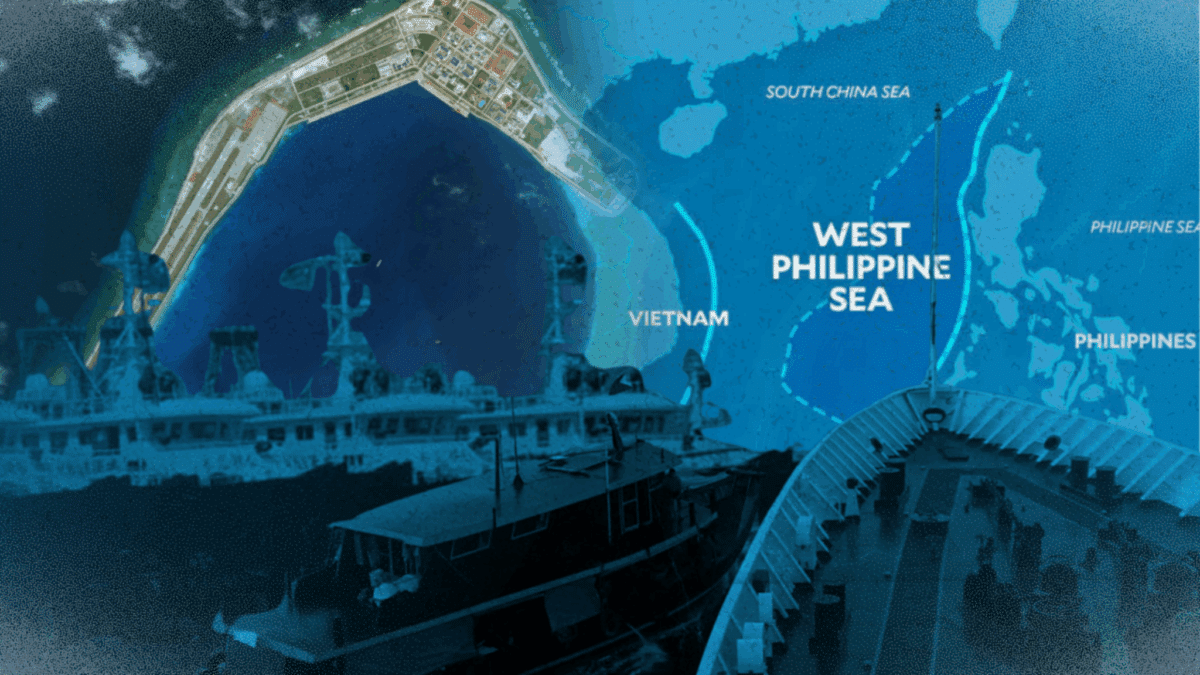
MANILA, Philippines — The Philippines has yet to go back to the arbitration court to demand damages from China for harassing and preventing Filipinos from fishing in Panatag (Scarborough) Shoal, nearly 10 years since winning the case against China, over contentious claims in the West Philippine Sea (WPS).
According to former Supreme Court Associate Justice Antonio Carpio, seeking damages and exploring untapped natural resources in the area, including the Recto (Reed) Bank, are among the “benefits” of the 2016 landmark decision that the Philippines has yet to reap.
“I have recommended that we file a case for preventing our fishermen from fishing in the territorial sea of Scarborough Shoal because the July 12, 2016, award says [it] is a common fishing ground,” said Carpio during the turnover ceremony of the 1875 Carta General del Archipielago Filipino to the National Library of the Philippines last week.
READ: Carpio: ‘Forgotten’ 1875 map backs PH vs China sea claim
“We should be able to fish there, but the Chinese have prevented us and the Vietnamese from fishing … So it’s a clear case. We can go to an arbitral tribunal and demand damages for our fisherfolk. But, well, my recommendation has not been taken up by the government,” he added.
Keeping it lawful
Should the Philippines decide to again lodge a case against China over the tense and sometimes violent confrontations in the WPS, it should bring it before the Permanent Court of Arbitration again or the International Court of Justice, both of which are based in The Hague, the Netherlands.
The arbitral award, noted Carpio, has also benefitted the United States and its allies, who are allowed to sail and conduct naval drills within the WPS, the waters within the Philippines’ 370-kilometer exclusive economic zone (EEZ), because of freedom of navigation and overflight.
“Because of the [arbitration case win], the US and its allies sail in the West Philippine Sea and they conduct naval drills. China is saying you cannot conduct naval drills … because that is within the 10-dash-line–that is quasi-national territory of China. But of course, the US and its allies will cite the arbitral award,” he noted, also referring to the updated Chinese map from the nine-dash-line demarcating its claim over nearly the entire South China Sea.
He, however, pointed out that the enforcement of the arbitration ruling under international law is weak as China continues to assert its 10-dash-line as its “international boundary.”
This lack of compliance, especially from China, which is bound by the United Nations Convention on the Law of the Sea after having ratified it in 1996, has also held back the Philippines from pursuing explorations for natural gas and oil in Recto Bank, which is well within the Philippines’ EEZ.
“That (2016 ruling) is not a complete enforcement, because we cannot get the gas in Reed Bank. The Reed Bank is within the 10-dash-line … Of course, we are not happy with that, but international law is not perfect,” he said.
Carpio expressed frustration over the Philippine government’s lack of political will to extract gas in Reed Bank—something that Malaysia and Indonesia have done despite maritime disputes.
“So nothing is happening in Reed Bank. The gas prices have gone up. The Malampaya (gas field) is running dry … We don’t have the political will, unlike Malaysia and Indonesia, that’s a big problem,” he stressed.
The Malampaya field off Palawan province, the country’s first natural gas discovery, is nearing depletion. It supplies about 40 percent of Luzon’s electricity needs, but is projected to be drained by 2027. /cb


