





After 2016 arbitral award, West Philippine Sea shifted from fish to force


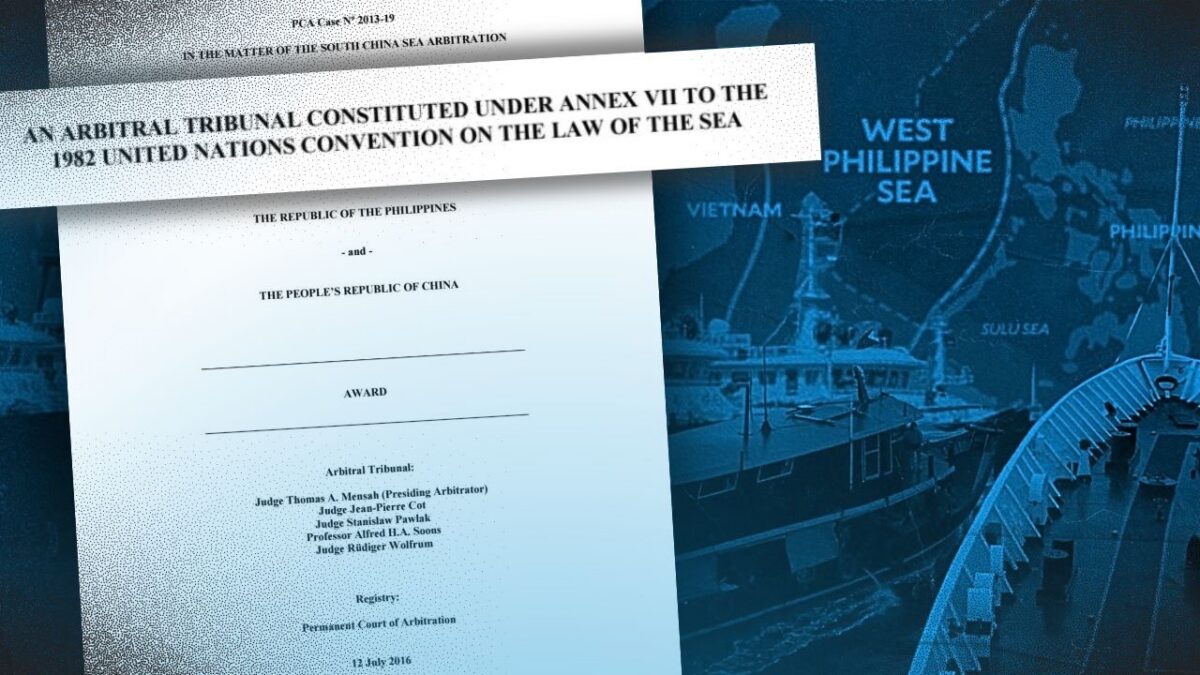
MANILA, Philippines — The 2016 arbitral award that declared China’s nine-dash line, now the 10-dash line, as having no legal basis under international law is widely recognized as a landmark win for the Philippines, which initiated the case against Beijing in 2013.
Nearly a decade later, however, a new analysis points to a dramatic and troubling shift: the West Philippine Sea’s transition from a fishing line to a militarized zone.
Alicor Panao, an Inquirer data scientist and associate professor at the University of the Philippines, said the decision did not bring the legal clarity many had hoped for.
RELATED STORY: New West Philippine Sea flashpoint: ‘Brace for impact!’
“Instead, it seemed to have triggered a ‘redefinition’ of the region, transforming it from a site of local maritime policing into a theater of high-stakes military standoff,” he said.
“The West Philippine Sea is no longer a dispute over fishing grounds, but a frontier of global military might,” Panao stressed.
Based on his analysis of the South China Sea Data Initiative, which contained more than 1,200 news headlines corresponding to events in the West Philippine Sea, Panao said the nature of conflict in the maritime zone saw a “startling shift.”
The data collection initiative is a project from Emory University and the University of California, San Diego, led by political scientists Renard Sexton and Nico Ravanilla.
RELATED STORY: West Philippine Sea: Chinese ship runs aground off Pag-asa island
The dataset, archived in the Harvard database, showed that before the landmark decision, fisheries disputes were the main driver of tension, accounting for nearly 53% of all incidents.
Between 2016 and 2020, however, its share dropped to 10.6%.
Over the same period, the West Philippine Sea became more militarized. Military exercises increased from 23 to 181 events, while naval operations and freedom of navigation operations rose from 23 to 136 events.
RELATED STORY: Media witness China’s maneuvers vs PH ships
Strategic deployments of permanent infrastructure also jumped fivefold, from 18 to 96 events.
For Panao, this “new normal” highlights an “increasingly aggressive stance by China,” with recorded initiating actions more than doubling after the decision to 90 events.
RELATED STORY: West PH Sea: Manila slams ‘high-risk’ Chinese actions near Scarborough
As he pointed out, the legal victory has proven bittersweet, confirming a sobering reality for smaller claimant states like the Philippines. /dm
For comprehensive coverage, in-depth analysis, visit our special page for West Philippine Sea updates. Stay informed with articles, videos, and expert opinions.


