





PH interest a must in oil search talks – think tank


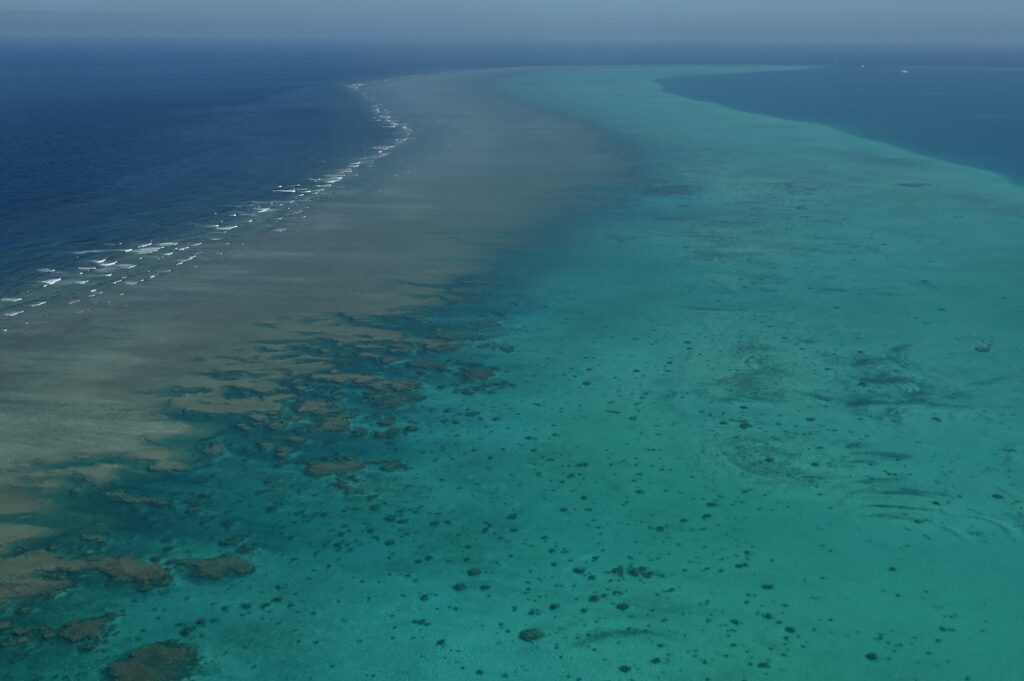
MANILA, Philippines — A local think tank has urged the Marcos administration to strongly reconsider plans for a joint energy exploration agreement between the Philippines and China in the West Philippine Sea (WPS), saying Beijing has “repeatedly demonstrated that it is neither a reliable partner nor a responsible actor.”
Stratbase Institute warned that engaging nations that have “consistently acted in bad faith is not only unnecessary but ultimately detrimental to the Philippines’ long term national interest.”
“A state that persistently disregards international law and violates Philippine sovereign rights cannot be expected to honor any agreement. Entering into such a partnership would expose the country to unnecessary risk,” Stratbase president Victor “Andres” Manhit said in a statement on Monday.
READ: Sotto wants PH-China joint oil deal to succeed after Duterte admin stall
Manhit’s comments came after the government said it was considering joint gas exploration with China particularly in the western section of the Philippines’ exclusive economic zone amid the energy crisis brought on by the Middle East conflict.
In an earlier interview with Bloomberg, President Marcos said the global oil crisis—triggered by the effective control of Iran of the Strait of Hormuz—could be the “impetus” for the Philippines to “come to an agreement” on such joint explorations in the disputed regions in the South China Sea.
“That’s something we’ve been talking about a great deal, but territorial disputes are getting in the way of that,” the President said.
Senate President Vicente Sotto III said he was hoping that the proposed joint oil exploration with China, which was raised during the administration of Rodrigo Duterte, would push through under the Marcos administration.
Senators Panfilo Lacson and Sherwin Gatchalian supported the initiative, but reminded that there must be safeguards in place to protect national interest and sovereignty.
Sen. JV Ejercito, on the other hand, had cautioned against the project, asking how one could trust a country “trying to undermine your sovereignty and trying to annex your territory.”
Sovereignty
For Manhit, energy security “must never come at the expense of sovereignty.”
“No crisis should be used to justify compromising the Philippines’ legal position or ignoring the lived realities of Filipino fisherfolk and front-liners who continue to bear the consequences of China’s actions in the WPS,” he said.
According to Manhit, any discussion of joint energy exploration activities must be firmly anchored in international law as well as the 2016 arbitral award that invalidated China’s sweeping claims over the South China Sea.
Instead, Manhit said, the government should pursue “clear and decisive measures” including the full implementation of President Marcos’ Executive Order No. 111, which adopted Philippine names for 131 features of the Kalayaan Group of Islands in Palawan province as an exercise of the country’s sovereignty in the West Philippine Sea.
The Philippines and China are embroiled in a long-standing row over South China Sea areas that are within Manila’s exclusive economic zone and territory.
Despite the dispute, Marcos and Chinese President Xi Jinping agreed to resume discussions on oil and gas exploration in the South China Sea during a bilateral summit in 2023.
Trap
Former Supreme Court Associate Justice Antonio Carpio shared the same sentiment, saying that a possible acceptance of China’s terms in the current talks would be a “suicide” for the Philippines.
“Joint development is a trap because joint development means China owns the gas, the oil, and all the natural resources,” Carpio said in an interview during his visit to Pag-asa island last week.
Both the Armed Forces of the Philippines and the National Security Council warned the government against partnering with China on oil and gas exploration, accusing Beijing of not being a “reliable partner.”
According to Carpio, the joint exploration of oil in parts of the West Philippine Sea could be done if both Manila and Beijing would follow the original terms of reference that former Foreign Secretary Teodoro Locsin Jr. signed during the last year of the Duterte administration.
Under that memorandum of understanding, China shall participate under the service contract system of the Philippines, where the oil and gas discovered shall belong to Manila. —WITH A REPORT FROM KEITH CLORES
For comprehensive coverage, in-depth analysis, visit our special page for West Philippine Sea updates. Stay informed with articles, videos, and expert opinions.


