





West PH Sea: Japan pivots Indo-Pacific strategy toward Southeast Asia


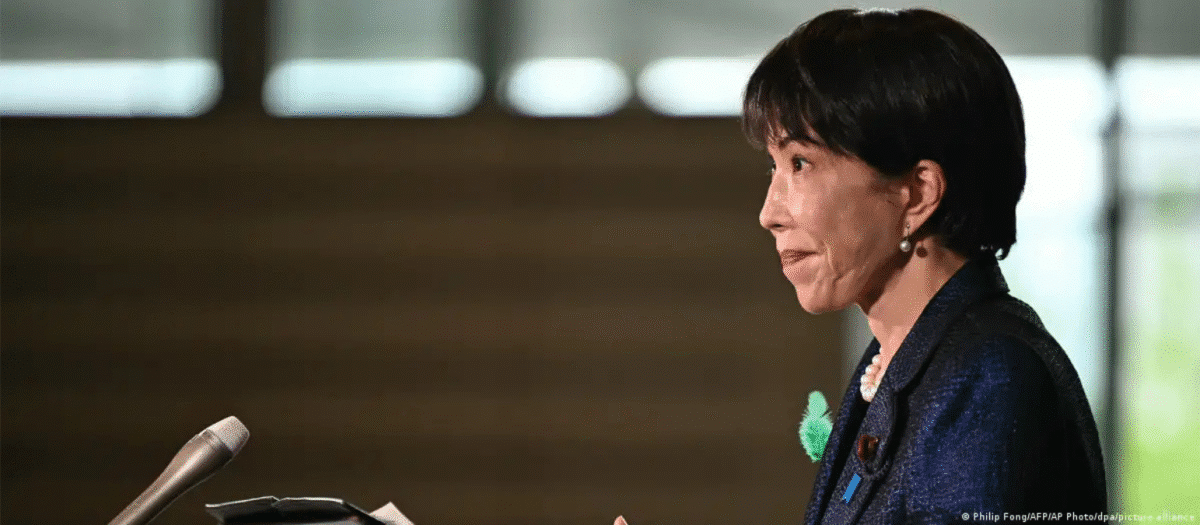
Japan’s Prime Minister Sanae Takaichi announced an updated version of her country’s regional strategy in Vietnam last weekend, underlining Tokyo’s growing reliance on Southeast Asia at a time of intensifying great-power rivalry.
Takaichi met her Vietnamese counterpart, Le Minh Hung, on Saturday in Hanoi, where the two leaders oversaw the signing of six cooperation agreements, including on disaster-resilient rural development, climate-resilient infrastructure and satellite data exchange.
The visit came as Japan and Vietnam look to deepen their “Comprehensive Strategic Partnership,” which has become increasingly important to both sides.
READ: Japan unveils $10-billion support for Southeast Asia amid oil crunch
The two governments agreed to work toward raising Japanese investment in Vietnam to $5 billion (€4.3 billion) per year and bilateral trade to $60 billion by 2030, according to Vietnam’s Foreign Ministry.
Bilateral trade exceeded $50 billion for the first time last year, while Japan remains one of Vietnam’s largest sources of foreign investment.
Japan and Vietnam also share concerns about China’s territorial claims and military activity in the East and South China Seas.
Japan reboots its Indo-Pacific vision
Japan’s long-term push to diversify its critical minerals supply away from Chinese dominance is now a central feature of its partnerships with Indo-Pacific partners.
In Hanoi, the two leaders agreed to strengthen cooperation on rare earths and other critical minerals, as well as artificial intelligence, semiconductors and space technology.
Takaichi also pledged $10 billion to help Asian partners secure energy resources and strengthen supply chains amid disruption caused by conflict in the Middle East. Tokyo said the first project would involve support for crude oil procurement for Vietnam’s Nghi Son Refinery and Petrochemical Complex.
READ: WPS: Japan, Philippines to launch working-level destroyer export talks
Takaichi’s Vietnam visit formed part of a wider diplomatic push. She traveled to Australia on Sunday and Monday, while Japanese Defense Minister Shinjiro Koizumi is visiting Indonesia and the Philippines between May 3 and 7. Japan signed a new defense agreement with Indonesia this week.
The most important announcement came on Saturday, when Takaichi unveiled Japan’s updated Free and Open Indo-Pacific (FOIP) strategy, a decade-old policy that commits Tokyo to an economic and security role across the Indo-Pacific.
“In this region, which holds the key to the future peace and stability of the international community, I am reaffirming my resolve to fulfill Japan’s role — as we have always done, and indeed, be more proactive than ever — in building an international order based on freedom, openness, diversity, inclusivity and the rule of law,” she said in a speech at Vietnam National University, according to Reuters.
Under the updated FOIP, Takaichi said Japan would focus on three priority areas: building economic infrastructure for the age of AI and data; expanding public-private cooperation to generate growth; and enhancing security cooperation.
Changing strategic landscape
She also said Tokyo would work to expand the Comprehensive and Progressive Agreement for Trans-Pacific Partnership, the 12-member trade pact that Japan helped preserve after the United States withdrew from its earlier version.
Takaichi’s late mentor, former Prime Minister Shinzo Abe, unveiled the FOIP concept in Kenya in 2016. Former Prime Minister Fumio Kishida later announced an update in India in 2023.
But the strategic environment has changed dramatically since Abe’s original speech. China has become more powerful and more assertive, while the United States’ commitment to the region has become less predictable under President Donald Trump.
Asian partners must “adapt to these new realities, including structural changes in the international order resulting from geopolitical competition, accelerating technological innovation and the rise of the Global South,” she said in Hanoi.
From principles to practical resilience
For Japan, that means FOIP can no longer be only a statement of diplomatic principles.
“Clearly, the FOIP is in trouble, and Takaichi’s speech in Vietnam articulated that,” Mark Cogan, associate professor of Peace and Conflict Studies at Japan’s Kansai Gaidai University, told DW.
READ: Marcos congratulates Japan’s PM Takaichi, eyes Asean collaboration
“While she again stressed the effectiveness of Japanese diplomacy in the 10 years since it was launched, protection against coercion is more in jeopardy than ever before because of the changing nature of warfare and advanced technologies,” he added.
That explains the updated focus on artificial intelligence, data security and cyber threats, as well as diversification in critical minerals.
Takaichi noted that Japan wants to see broader recycling of critical minerals through its own advanced technology, with Vietnam, Thailand, Malaysia and Indonesia seen as crucial partners.
Tokyo courts ASEAN as US role shifts
Kei Koga, an associate professor at Singapore’s Nanyang Technological University, told DW that Takaichi’s visit to Vietnam suggests that “Japan’s strategic focus on the Indo-Pacific remains intact, but with a stronger emphasis on Southeast Asia.”
Japan has moved quickly to strengthen regional ties since Takaichi took office in October 2025. Within weeks, she attended the ASEAN summit in Malaysia and the APEC summit in South Korea.
In January, Japan and the Philippines signed an Acquisition and Cross-Servicing Agreement to boost military logistics cooperation. In April, Takaichi’s Cabinet revised Japan’s defense export rules, ending a long-standing restriction on lethal arms exports to approved partner countries.
Tokyo has also advanced defense cooperation with Australia and the Philippines, while seeking closer ties with Indonesia and other Southeast Asian states.
Japan’s updated FOIP appears to be less heavily focused on value-oriented language than earlier versions, Koga told DW.
Although Takaichi mentioned Japan’s commitment to “freedom from coercion, the rule of law, and market economies” in the Indo-Pacific, her emphasis was on helping countries acquire “resilience” and the capacity to make their own decisions across economic, social and security domains, he said.
“This framing places greater emphasis on strategic autonomy than on ideological alignment,” Koga added.
That approach may be Japan’s best chance of keeping FOIP relevant. Southeast Asian states do not want to choose between China and the United States. But many want options, partners and leverage.
“In essence, for the FOIP to survive, Japan wants stronger cooperation with ASEAN to build that resilience, and it believes it is the most effective partner to accomplish those aims,” said Cogan. /dl
For comprehensive coverage, in-depth analysis, visit our special page for West Philippine Sea updates. Stay informed with articles, videos, and expert opinions.


