





‘China’s West PH Sea info manipulation expected through 2028 polls’


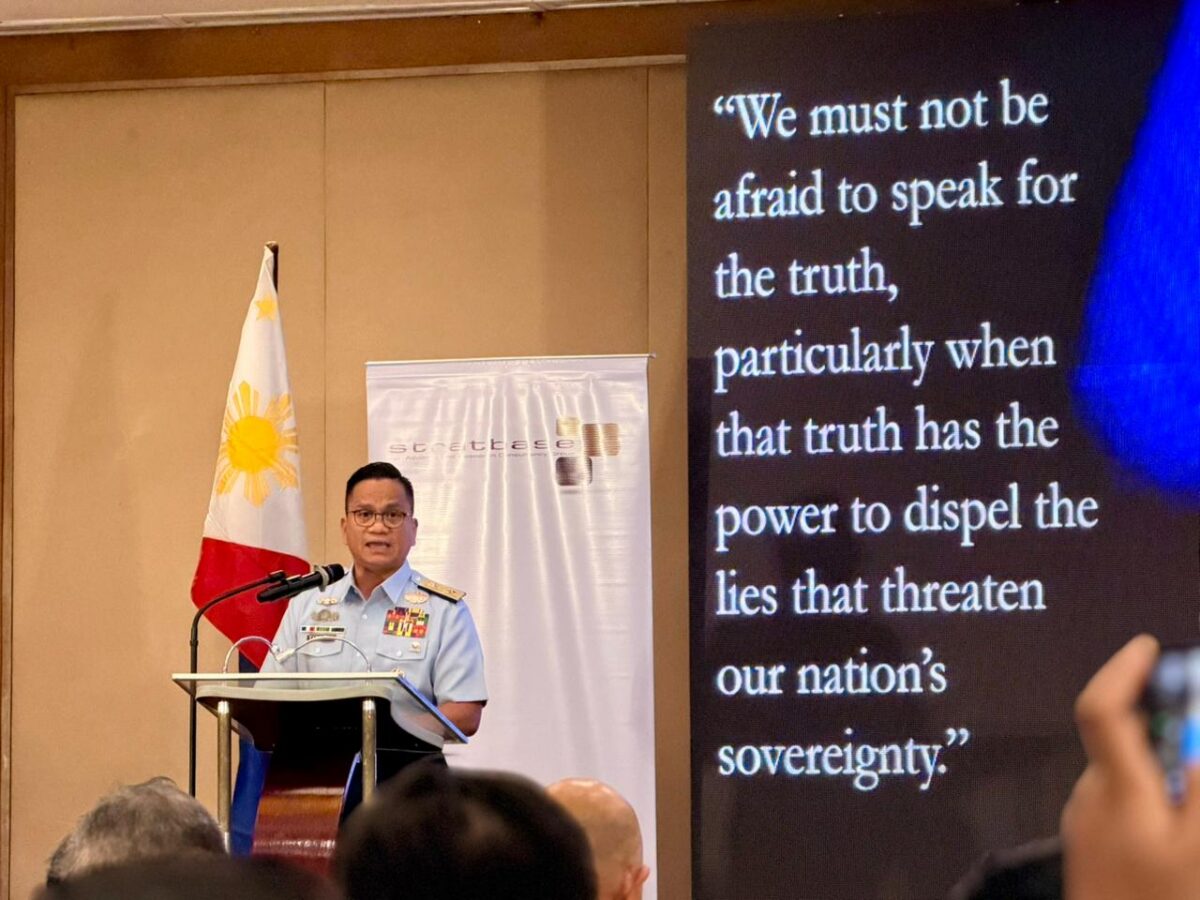
MANILA, Philippines — Chinese foreign information manipulation and interference (FIMI) operations linked to the West Philippine Sea are expected to persist through the 2028 national elections, Philippine security officials said.
Speaking on the sidelines of a forum hosted by the Stratbase ADR Institute in Makati City, Philippine Coast Guard spokesperson for the West Philippine Sea Commodore Jay Tarriela said Beijing’s so-called FIMI operations have escalated in recent years as the government publicizes incidents in contested waters.
“FIMI is basically a battle of narrative,” Tarriela told reporters. “How can they be able to shape public opinion?”
READ: West Philippine Sea Updates
Tarriela said China’s information activities have intensified alongside Manila’s efforts to document and release photos and videos of confrontations in disputed areas in the West Philippine Sea.
“If we have nine out of 10 Filipinos now who are supportive of transparency, maybe by 2028, 10 out of 10 will be completely aware of what’s happening,” he said.
“It’s very difficult for the Chinese government to alter public opinion right now.”
He said he does not expect Beijing to stop such activities before the 2028 elections.
“I don’t think the Chinese government will eventually say that we’ll stop doing this,” he said.
Tarriela declined to comment on specific political figures but said any candidate China might support in 2028 would likely be someone aligned with its interests and less inclined to highlight developments in the West Philippine Sea.
“If there is any candidate that the Chinese government would be supporting in 2028, of course, that should be somebody who aligns with their own interests, who doesn’t really wish to make the Filipinos aware of what’s really happening in the West Philippine Sea,” he said.
‘No toning down’
Tarriela also rejected suggestions that authorities have been asked to tone down public messaging following recent exchanges with the Chinese Embassy.
“There is no toning down,” he said.
Tarriela added that Malacañang continues to support the government’s transparency initiative.
He warned that reducing public disclosures could weaken awareness and allow Beijing to advance activities in disputed areas with less scrutiny.
READ: AFP cyber chief warns of rising threats linked to West PH Sea
“If we silence transparency now, by 2028 people might forget which politicians stood up for our position in the West Philippine Sea,” he said.
He cited recent maritime domain awareness flights over Bajo de Masinloc, where Philippine authorities observed two China Coast Guard vessels and eight Chinese maritime militia ships.
He said Philippine vessels were deployed to challenge their presence and document floating buoys that remain in the area.
‘Information laundering’
Philippine Navy spokesperson Capt. Marissa Martinez said China’s information operations are continuing and evolving with the use of emerging technologies, including artificial intelligence.
“With the emergence of technology, they are using AI and platforms that generate false narratives and even false visuals,” Martinez said in a separate interview on the sideline of the same forum.
“They are not only using bots and trolls.”
She described social media posts by the Chinese embassy as part of Beijing’s tactics, techniques and procedures under FIMI operations, and warned of “information laundering,” in which the origins of false or misleading content are obscured.
“It could be a state actor or an individual or politician who hires someone outside the country to spread false information,” she said.
“This is very dangerous.”
Martinez said the Armed Forces of the Philippines supports the broader government transparency initiative and has expanded public education campaigns nationwide to counter disinformation and explain the country’s maritime claims over the West Philippine Sea.
She added that the Navy is strengthening its cyber capabilities, including the development of a naval cyber warfare force aimed at protecting information systems and countering online threats.
Both officials said Chinese vessels continue to be monitored in disputed waters, describing their presence as “illegal.”
As the 2028 elections approach, Martinez warned that maritime issues could be weaponized online to sow division.
“One of the topics they would be using is the West Philippine Sea, corruption, governance and a lot more because they would want to divide people,” she said, urging the public to verify sources and scrutinize suspicious websites and social media accounts.
“We need to educate people on what is really happening out there,” she added.
For comprehensive coverage, in-depth analysis, visit our special page for West Philippine Sea updates. Stay informed with articles, videos, and expert opinions.


