





West Philippine Sea: China dumping cyanide in Spratlys, PH says


MANILA, Philippines — The Philippines accused Chinese fishermen on Monday of pouring cyanide in waters in the Spratly Islands, a flashpoint in the disputed West Philippine Sea that has been the site of violent confrontations with Chinese vessels.
Beijing claims the strategic South China Sea in nearly its entirety, despite an international ruling that its assertion has no legal basis.
The National Security Council (NSC) alleged the poisoning began last year around Second Thomas Shoal in the Spratly chain, which sits near vital shipping lanes and is reputedly rich in minerals.
“The use of cyanide on Ayungin Shoal is a term of sabotage that seeks to kill local fish populations, depriving Navy personnel of a vital food source,” NSC assistant director-general Cornelio Valencia told a news conference, using the Philippines’ term for the reef.
READ: Bottles of ‘cyanide’ seized from Chinese fishers
These actions also “threaten our Navy personnel” through exposure to contaminated water, eating poisoned fish, as well as eroding corals, Valencia added.
Cyanide is a “highly toxic chemical known to cause severe and irreversible damage to humans and marine ecosystems,” the NSC said in a statement.
“Laboratory analysis conducted by the National Bureau of Investigation’s Forensic and Scientific Research Service has conclusively established that the yellow bottles seized from the sampans contain cyanide,” the agency explained.
Manila and Beijing have a long history of maritime territorial disputes in the hotly contested waterway, including a violent clash in June 2024 in which Chinese coastguard personnel wielding knives, sticks and an axe boarded Philippine Navy boats.
Valencia said Manila raised the alleged poisoning with Beijing at a recent meeting but has received no formal reply.
The Chinese embassy did not immediately respond to AFP’s requests for comment on Monday.
READ: BFAR: Chinese, Vietnamese fishermen use cyanide in Bajo de Masinloc
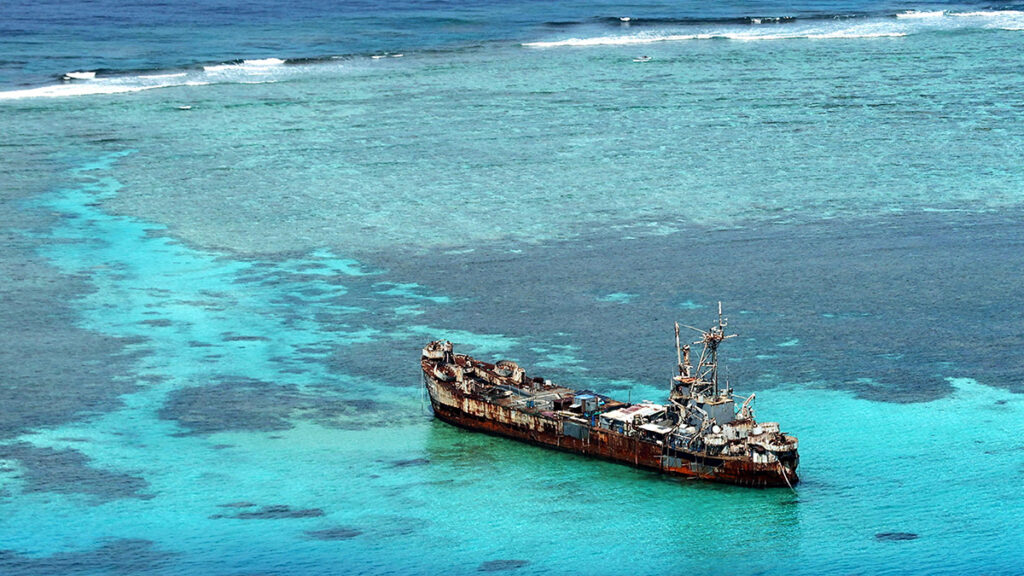
Valencia said that reef damage from cyanide poisoning could also compromise the structural foundations of the BRP Sierra Madre, a World War II-era warship on which the Filipino troops are stationed.
Manila deliberately grounded the vessel on the shoal in 1999 to stake its claim to the territory.
Philippine Navy spokesman Rear Admiral Roy Vincent Trinidad said Filipino troops had seized 10 bottles of cyanide from sampan boats launched from Chinese fishing ships in February, July and October 2025.
He said that soldiers observed another Chinese sampan crew poisoning waters near the shoal last month, adding that the shoal’s waters later tested positive for cyanide.
None of the troops aboard the warship have tested positive for the poison, Trinidad added.
READ: PH to build case on Chinese fishers’ alleged cyanide use in WPS
Valencia and Trinidad both alleged the fishermen’s mother ships worked for the Chinese Navy.
Valencia said the NSC planned to submit a report next week to the Department of Foreign Affairs which could become the basis for a diplomatic protest.
Given this development, the NSC ordered the Armed Forces of the Philippines and the Philippine Coast Guard to intensify its monitoring of the area “to prevent further environmental harm.” With a report from Jason Sigales/INQUIRER.net /dl
First posted 12:04 pm
For comprehensive coverage, in-depth analysis, visit our special page for West Philippine Sea updates. Stay informed with articles, videos, and expert opinions.


